
New Funding for Evidence and Impact
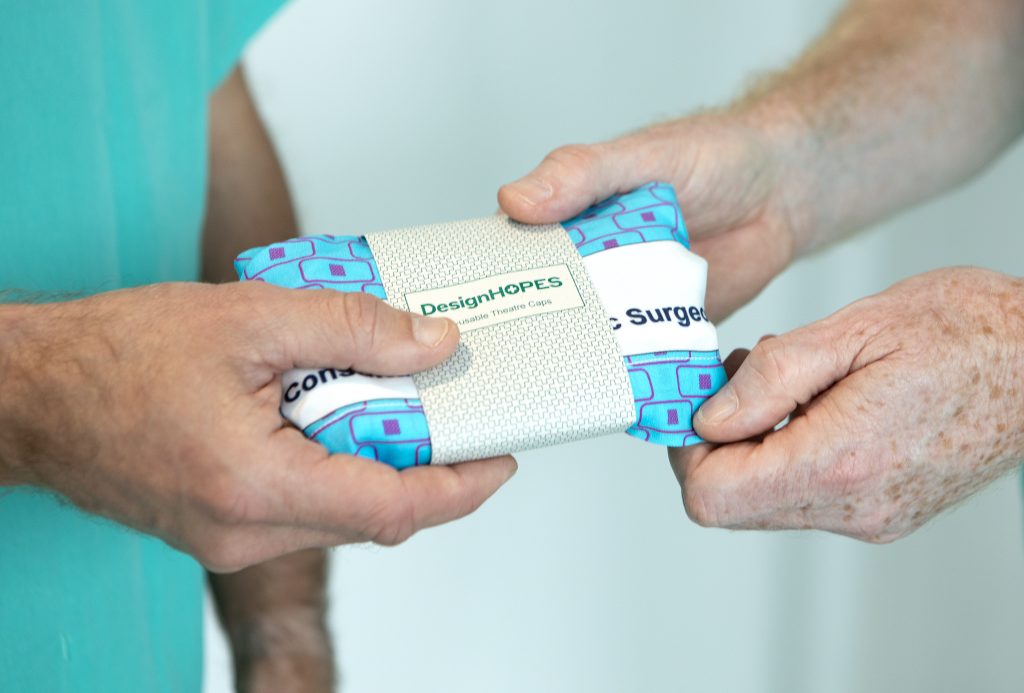
Design HOPES is delighted to announce a new collaborative funded project with Strathclyde Business School worth over £5000 bringing together two areas of research, Design and Economics, along with researchers from the AHRC-funded Design HOPES Green Transition Ecosystem Hub and from the Department of Economics at the University of Strathclyde, to tackle a healthcare sustainability challenge.
In a single year, NHS Scotland use more than 2.4 million single-use theatre caps. Design HOPES has been working with NHS Scotland staff to co-design and develop a reusable theatre cap made from a single plant-based material, reducing its environmental footprint. To date, more than 1,000 Design HOPES reusable caps have been produced for staff across Scotland. Ongoing testing shows that each reusable theatre cap withstands more than 600 washes, so each one will replace 600 or more single-use disposable caps. This change is expected to reduce waste, lower costs and create new “green” design and manufacturing jobs in Scotland. However, these wider economic and environmental effects have not yet been measured. Without that evidence, health boards and policymakers find it difficult to decide whether to adopt the caps at scale.
The Department of Economics at the University of Strathclyde has recently developed a health-specific macroeconomic input-output (IO) model. It was originally created to assess the economic and environmental impacts of plastic pollution in the UK and to test policy options for reducing it, but has a number of potential uses. This project will adapt the health IO model to assess the economic and environmental consequences of adopting Design HOPES reusable theatre caps at scale with the results giving health boards and policymakers the evidence base they need to make informed decisions.

