Low-carbon Storage for Sustainable Medicine Logistics
About the Project
Through a series of exploratory workshops as part of Design HOPES with NHS Greater Glasgow & Clyde (NHSGGC), and a site visit to Queen Elizabeth University Hospital (QEUH) pharmacy and wards, numerous challenges were observed regarding medication storage and transport, which contribute to avoidable carbon and material waste in medicine-management processes.
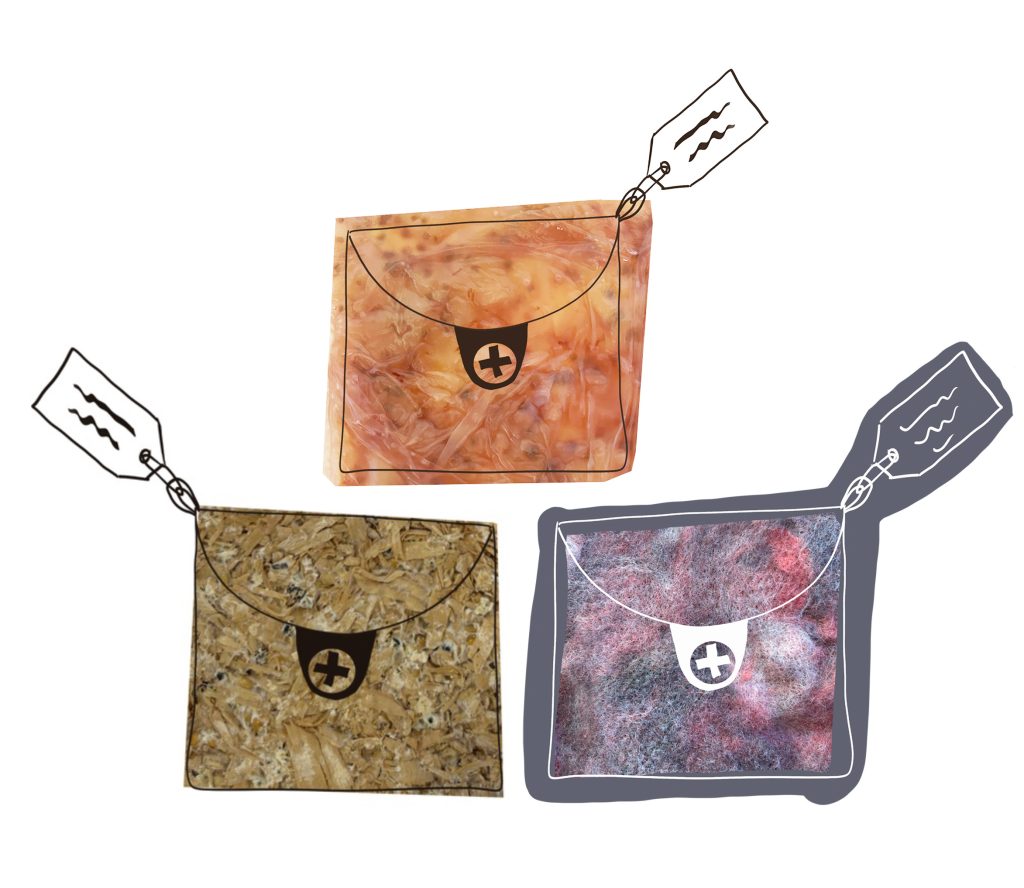
This project explores whether low-carbon, bio-based and recycled materials could support better-functioning, more sustainable storage solutions tailored to the realities of clinical practice. Working collaboratively with NHSGGC partners, it will investigate how these materials can support novel storage solutions for healthcare, including experimentation with emerging alternatives to plastic such as mycelium, cork, flax, seagrass and recycled paper.
Building directly on the team’s partnership through the Design HOPES programme and our NHSGGC collaborations focused on pharmaceutical waste reduction, this funding allows us to extend the work into material innovation, product design and hospital logistics, producing the evidence, prototypes and collaborative structures needed to support future large-scale funding applications and potential translational work with Scottish manufacturers.